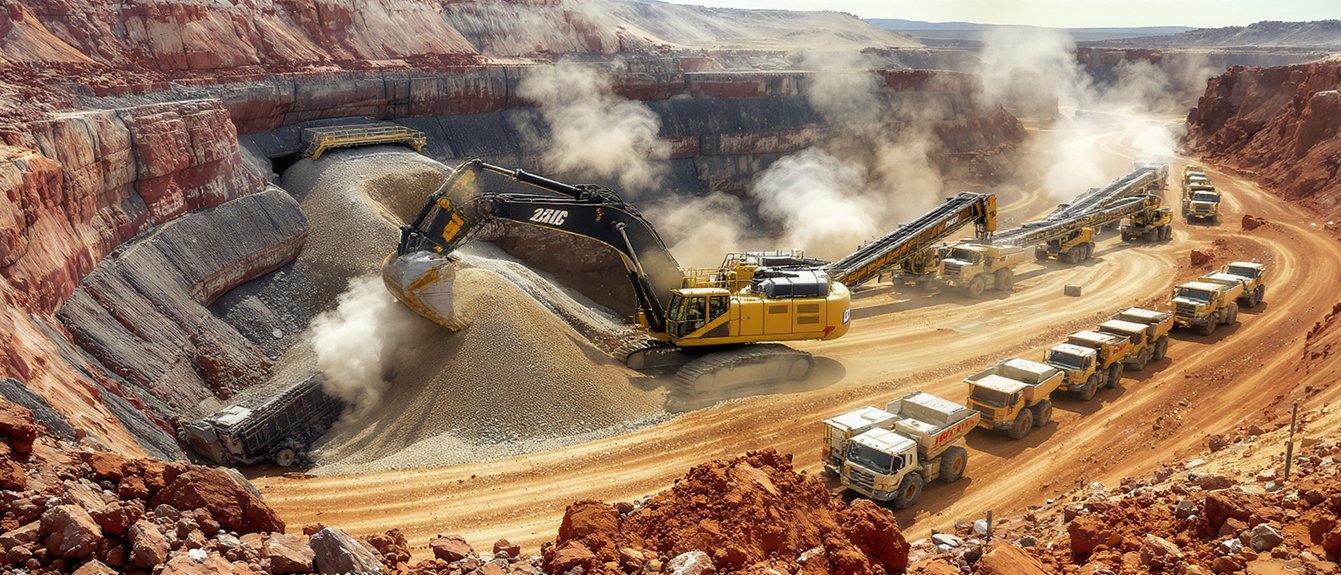
To maximize production, size your excavator, crusher, and haul fleet as one coordinated system—not as separate machines. Start by setting a realistic sustained-output target, then assess material density, fragmentation, equipment cycle times, and site conditions. Compare each stage’s capacity to identify the bottleneck; the limiting factor may not be where you expect. Use those findings to balance the system, reduce avoidable delays, and support safe, consistent operation. Review site-specific safety procedures and check current MSHA requirements when planning changes.
Set a Target for Excavator, Crusher, and Truck Output

Before sizing the fleet, set a production target for the material you need to move and process per hour or shift. Define the required tonnage, operating hours, and planned availability, then convert them into a consistent production rate.
Use the same target to coordinate excavator loading, crusher feed, and truck delivery. If one stage runs ahead of the others, it can create a bottleneck or leave equipment waiting. Estimate each unit’s effective output using its cycle time and planned pauses, and identify the stockpile or feed point where you’ll measure actual throughput.
During each shift, compare tons per hour, truck cycles, crusher utilization, and downtime with the target. Schedule equipment maintenance around production windows where practical, and record how it affects availability.
A clear baseline helps you identify bottlenecks and adjust fleet capacity before production losses add up. Keep the plan aligned with site safety procedures and check current MSHA requirements.
Match Excavator Output to Material and Site Conditions
Match excavator output to material density, fragmentation, and digging resistance. Then account for bench height, reach, and ground conditions. These factors affect bucket fill, cycle time, and effective tons per hour.
> Match excavator output to material and site conditions to optimize bucket fill, cycle time, and effective tons per hour.
For hard or poorly fragmented material, expect slower penetration and higher tooth loads. Choose a bucket and wear components suited to the material, and avoid forcing the machine beyond its hydraulic limits.
For loose, uniform material, increase bucket fill when conditions allow, while maintaining safe, consistent cycles and stable undercarriage support.
Adjust for site conditions, too. Wet ground can reduce traction and travel speed; heat, dust, and cold can affect operating time and component performance.
Position the excavator for clean passes, adequate swing clearance, and consistent digging depth. Keep the work area stable and follow applicable MSHA requirements; check current regulations for your operation.
Reassess production as the face and ground conditions change. Adjust the digging approach, bucket fill, or machine position as needed to maintain productivity without compromising safety.
Size Crusher Capacity to Match Excavator Feed
Size crusher capacity to match your excavator’s sustained feed rate, not its short-term peak output. If the crusher can’t process material as quickly as the excavator delivers it, the feed area can back up, interrupting production and creating extra handling.
Compare the excavator’s typical feed rate with the crusher’s rated throughput, and account for material size, moisture, and operating conditions. Adjust the excavator’s loading pace or crusher setup to keep material moving without overloading the circuit.
Keep the feed area clear and follow site safety procedures.
Match Feed Rate
Size the crusher to match the excavator’s sustained feed rate—not its peak bucket output. Estimate actual production using bucket size, cycle time, material density, and operator rhythm. Then compare that rate with the crusher’s capacity for the material’s gradation and the site’s operating conditions.
If the excavator consistently supplies less material than the crusher can process, some capacity will go unused. If it supplies more, adjust the loading pattern to prevent overfeeding and keep operation within the crusher’s rated range. During representative shifts, track hourly tonnage and feed consistency. Use those observations to fine-tune loading practices or crusher settings and maintain a steady production rate.
Coordinate changes with the equipment supplier or qualified service personnel, and follow applicable safety procedures. A well-matched system supports excavator efficiency, crusher durability, and a dependable daily production plan.
Prevent Crusher Bottlenecks
When your excavator feeds material faster than the crusher can process it, the queue grows and the excavator may have to slow down or stop. Size the crusher for the excavator’s average delivered tonnage—not its peak bucket output. Base your assessment on rock hardness, feed gradation, moisture, and the crusher’s expected throughput under actual site conditions.
Confirm that the feed opening can handle the material you plan to process; oversized pieces can bridge and interrupt production.
Track crusher utilization, queue time, and excavator idle hours to spot a capacity mismatch. If feed surges continue, adjust bucket size or loading rhythm, or evaluate whether more crusher capacity is needed. Stockpiling may help manage short-term variation, but it won’t resolve a persistent bottleneck.
Coordinate feed control with crusher maintenance. Worn liners and screens can reduce effective throughput, so inspect and service them according to the equipment guidance and your site’s maintenance plan.
Keep the loading position consistent and maintain clear sightlines between the excavator operator and the crusher area. Use agreed signals and follow site procedures to support safe, steady feeding.
Check current MSHA requirements and applicable site rules when reviewing operating and safety practices.
Match Haul Truck Capacity to Crusher Output
Keep the crusher consistently fed without building a truck queue by matching payloads and dispatch rates to its sustained throughput. Start with the crusher’s rated capacity, then account for material density, fragmentation, and moisture when estimating the usable payload each truck can deliver.
Estimate fleet production in delivered tons per hour. Include loading variability, haul distance, dumping time, and operating delays so the plan reflects actual site conditions. Dispatch enough capacity to support steady crusher feed, but avoid sending trucks faster than the dump pocket and downstream material-handling system can accept them.
Use dispatch controls to meter arrivals and adjust truck assignments as crusher output or site conditions change. Review delivered tons, queue length, and crusher utilization each shift. These measures can help identify whether payload, fleet size, or dispatch timing needs adjustment.
At the tipping area, maintain clear approach routes, suitable berms, and controlled dumping procedures. Set payload limits based on road and ground conditions, truck limits, and site requirements—not nominal ratings alone. Follow applicable MSHA requirements and check current regulations.
This approach helps protect workers and equipment while supporting steady production.
Match Machine Cycle Times to Prevent Bottlenecks
Compare excavator loading, truck hauling, and crusher processing cycle times to identify production constraints.
Then balance fleet capacity to support the target throughput, reduce equipment idle time, and keep material moving through each stage of the operation.
Use dispatch data and operator feedback to adjust loading, hauling, and processing rates, while maintaining safe work practices and checking current MSHA requirements.
Compare Cycle Times
A productive excavator, crusher, and haulage system depends on matching each machine’s cycle time to the next operation’s capacity. Record the excavator’s dig, swing, dump, and return times over representative loading cycles. Then compare those results with truck spotting, loading, travel, dumping, and return times, along with the crusher’s feed and processing intervals.
Use the comparison to identify where queues form and where equipment waits. If trucks arrive faster than the crusher can accept material, manage staging to prevent congestion and maintain safe access. If loading takes too long, review the loading sequence, truck positioning, and operator practices to help keep the crusher supplied.
For a reliable comparison, collect cycle times under typical material, haul distance, and operating conditions. Review both averages and variation, since inconsistent cycles can point to changing conditions or process bottlenecks. Use the findings to make practical adjustments, and confirm that any changes support safe traffic flow and comply with current MSHA requirements.
Consistent cycle-time monitoring can improve productivity and operator efficiency while reducing avoidable idling, abrupt starts, and unnecessary equipment workload. This supports equipment durability and more predictable operation.
Balance Fleet Capacity
Match fleet capacity to machine cycle times to keep material moving without overloading any part of the operation. Base equipment decisions on measured production rates, not nameplate ratings.
Track bucket payloads, truck exchange time, crusher throughput, and haul distance to identify the bottleneck. Then adjust truck count, payload, or operating pace so each stage can supply the next at the required feed rate.
If the crusher can process more material than the excavator supplies, some crushing capacity will go unused. If trucks can’t clear the loading area, excavation may slow and create congestion.
Review the balance whenever material, haul routes, or bench conditions change. Keep equipment maintained to support reliable performance, and train crews to use consistent loading, spotting, and discharge practices.
Follow applicable safety procedures and check current MSHA requirements. Use cycle-time data to confirm that the fleet continues to meet production targets safely and efficiently.
Eliminate Idle Time
Eliminate idle time by coordinating excavator loading, truck exchanges, haul cycles, and crusher feed around the slowest stage in the production chain. Track cycle times by task, then adjust truck assignments, loading targets, and dispatch intervals to keep material moving without creating queues.
If trucks are waiting at the excavator, review haul capacity and exchange delays. If the crusher is starved, check truck availability, route conditions, and feed coordination. Match bucket size and payload to the crusher’s acceptance requirements so loads support a steady feed instead of causing surges.
Use equipment maintenance to protect cycle consistency. Inspect tires, hydraulics, haul roads, and crusher wear components before problems disrupt production. Train operators on safe, efficient spotting, loading, and dumping procedures.
Review shift data to identify recurring delays, then rebalance assignments promptly. Small timing adjustments can improve throughput across the fleet while supporting safe operation.
Use Jobsite Results to Adjust Fleet Size
Jobsite data can show whether your excavator, crusher, and haul fleet are balanced in real operating conditions. Across representative shifts, track tons per hour, crusher feed consistency, truck cycle times, and equipment utilization. Compare actual output with your production target, then identify the bottleneck before adding or removing equipment.
Balance your fleet using jobsite data, identifying bottlenecks before adjusting equipment to meet production targets efficiently.
Use these indicators to guide adjustments:
- Trucks queue at the crusher: Review dispatch and haul capacity. Confirm that traffic patterns and dumping procedures support safe, steady delivery.
- The crusher is starved for material: Check excavator loading rates, material flow, and truck availability. Look for delays between loading and delivery.
- Trucks wait at the shovel: Review haul-unit count, cycle times, and loading delays. Reduce excess capacity or address the cause of long cycles.
- Breakdowns reduce availability: Review maintenance practices, equipment condition, and operator training before deciding whether additional machines are needed. Follow applicable safety requirements and check current MSHA regulations.
After each adjustment, measure results under comparable operating conditions. The goal isn’t the largest possible fleet, but steady crusher feed, productive equipment use, safe operations, and target tonnage at a competitive cost per ton.
Frequently Asked Questions
How Do Fuel Costs Affect Excavator, Crusher, and Hauling Equipment Selection?
Fuel costs affect both equipment selection and operating budgets. Compare excavators, crushers, and haul trucks based on fuel use per ton while confirming each machine can meet production targets and handle your site’s haul distances, material conditions, and maintenance needs. Review operating data with equipment suppliers and operators, and consider safety, uptime, and overall productivity—not fuel consumption alone.
What Safety Measures Should Operators Follow Around Crushers and Haul Trucks?
Wear appropriate personal protective equipment, establish and maintain exclusion zones, and use designated spotters when working near crushers and haul trucks. Before servicing equipment, follow the site’s lockout/tagout procedures and verify that hazardous energy is controlled. Confirm communication signals before work begins, stay alert to changing traffic and equipment conditions, and know the site’s emergency procedures. Follow applicable MSHA requirements and check current regulations to confirm your practices are up to date.
How Does Preventive Maintenance Reduce Downtime Across a Production Fleet?
Preventive maintenance reduces downtime by addressing wear before it causes an equipment failure or production stoppage. Review inspection findings, service records, and equipment data to identify developing issues. Then schedule repairs around production needs, confirm parts and qualified technicians are available, and coordinate safe service windows. Consistent planning helps keep the fleet productive and supports compliance with applicable safety requirements. Check current MSHA regulations and site procedures when planning maintenance.
When Should a Contractor Rent Equipment Instead of Buying It?
Rent equipment when demand is short-term, workloads are uncertain, or a specialized task doesn’t justify owning a machine. Renting can preserve capital, reduce the cost of idle equipment, and provide access to the machine you need for the job. Before deciding, compare rental costs with ownership costs, including maintenance, downtime, and resale value. Confirm the equipment is suitable for the site and task, and verify that operators are trained and required safety checks are in place. Check current MSHA requirements that apply to your operation.
How Can Telematics Improve Fleet Coordination and Equipment Utilization?
Real-time tracking helps dispatchers coordinate crews, direct equipment to active work areas, and reduce idle queues. Use utilization and cycle-time data to identify bottlenecks, spot maintenance needs, and adjust assignments. Pair these insights with regular operator and supervisor check-ins to improve dispatch decisions, limit downtime, and increase productive hours without compromising safe operating practices.