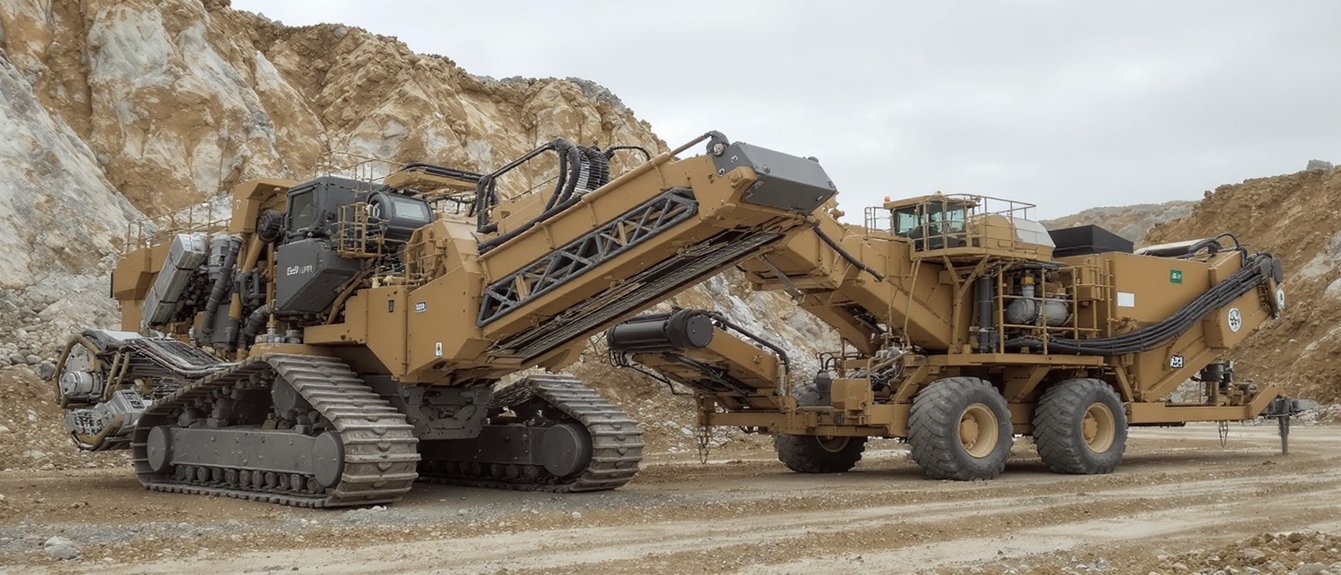
Choosing between a track-mounted and wheel-mounted plant starts with your site and production plan. Tracks provide traction and stability on soft, uneven, or steep ground. Wheels can simplify towing and repositioning on firm, level surfaces. The right choice can affect travel routes, setup time, access, and how safely crews move and operate the plant.
Before selecting a configuration, assess ground conditions, grades, haul routes, setup locations, and how often the plant will move. Match those needs to your production workflow, and review access and operating procedures with your crew. Check current MSHA requirements and applicable site rules when planning plant movement and setup.
Track-Mounted vs. Wheel-Mounted Plants at a Glance
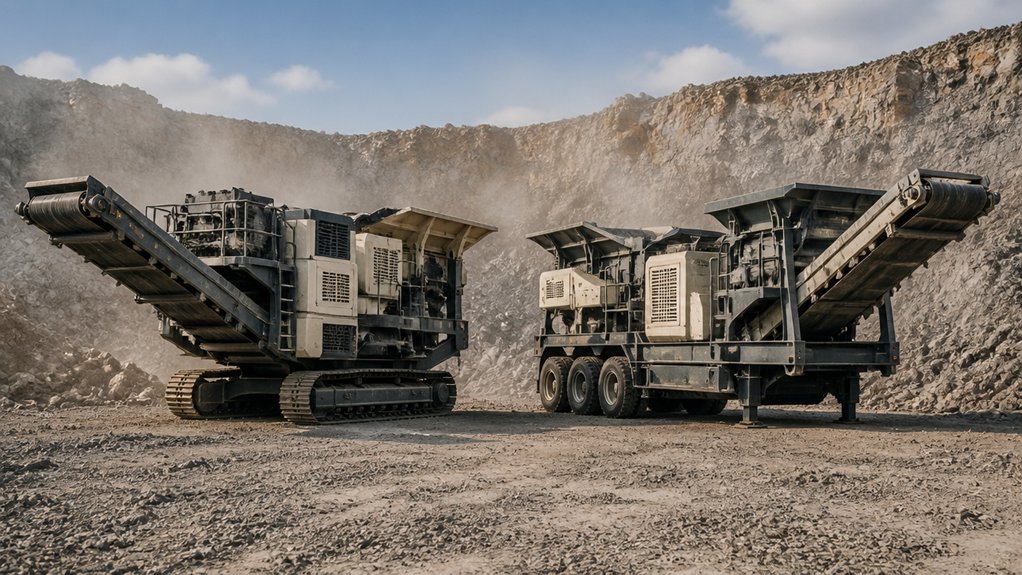
Track-mounted plants are a practical choice for uneven sites and jobs that require frequent repositioning. Their tracks provide traction on rough ground and allow the plant to move around the work area without a separate carrier. Before moving, plan the route, check ground conditions and confirm that the move can be completed safely.
Wheel-mounted plants are better suited to travel between locations on prepared roads, but they typically need a tow vehicle or truck for transport. Account for towing, setup and site access when planning schedules and equipment support. Follow applicable MSHA requirements and check current regulations for your operation.
Neither option is right for every job. Compare transport needs, site conditions, production requirements and the frequency of moves. Also consider maintenance: abrasive ground and turning can wear tracks, while debris and heavy loads can damage tires.
Review manufacturer guidance, service access and your maintenance capacity to estimate upkeep and support needs. A well-matched plant can help reduce avoidable delays and support safe, productive operation.
Match Plant Mobility to Your Site and Terrain
When a site has soft ground, steep grades or frequent moves, a track-mounted plant may provide the traction and mobility needed to work across the area. On firm, level pads with predictable travel routes, a wheel-mounted plant may be a better fit. Base the choice on actual site conditions, not assumptions.
- On saturated soil, tracks distribute machine weight over a larger area, which can help reduce sinkage.
- On uneven benches, tracks can improve traction. Confirm the plant’s operating limits and assess the route before moving.
- On compacted, level surfaces, wheels can support efficient travel between work positions.
- On mixed terrain, weigh traction needs against maintenance demands, including undercarriage wear and tire condition.
Match the chassis to the site’s bearing capacity, grades and repositioning frequency. Before operating, check the manufacturer’s guidance, inspect travel routes and confirm that the planned work complies with current safety requirements, including applicable MSHA regulations.
The right choice can support steady production and help prevent avoidable wear and downtime. Mobility alone doesn’t mean a plant can safely handle every terrain condition.
Compare Transport, Access, and Setup Needs
How a plant reaches the site can affect production just as much as how it moves around the work area. Track-mounted plants commonly travel on lowboy trailers, so confirm that haul roads, permits, loading equipment and unloading areas are suitable before mobilization. Their compact footprint can help with access in confined areas, but you still need a safe, workable plan for unloading and deploying the tracks.
Plan track-mounted plant transport, unloading and deployment before mobilization to avoid access issues and delays.
Wheel-mounted plants can often be towed between locations, reducing loading steps when the route, towing vehicle and equipment meet applicable requirements. Tight turns, soft ground and overhead or side clearances can still restrict access. Before delivery, check route widths, bridge limits, grades, ground bearing capacity, turning space and access for setup and service.
Plan enough time and space to level and stabilize the plant, connect conveyors and complete commissioning. Compare transport needs, setup labor and maintenance access when assessing operating efficiency. Confirm utilities, permits and clearly defined work zones in advance to reduce delays and avoid repositioning equipment after it arrives.
Review current safety requirements, including applicable MSHA regulations, and coordinate the work plan with site personnel and equipment suppliers.
Choose the Right Plant for Your Production Workflow
Match the plant to your production workflow
Once transport and setup requirements are clear, compare plant configurations against your production needs. Consider target throughput, material characteristics, feed and discharge arrangements, and how often the plant will move.
Use these checks to define operating requirements before selecting a configuration:
- Throughput: Set target rates for typical and peak shifts. Confirm the full process can maintain those rates without creating bottlenecks.
- Material: Assess abrasiveness, moisture, and feed-size variation. These factors affect wear, screening performance, and process consistency.
- Material flow: Map loader access, stockpile locations, conveyors, and discharge points. Plan routes that keep material moving and support safe equipment and personnel movement.
- Relocation frequency: Estimate moves by shift or project phase. Include setup time and production interruptions when comparing configurations.
Also review maintenance access and parts availability. Equipment durability can support dependable output through demanding duty cycles, but operating performance depends on the whole process.
Evaluate cost efficiency based on utilization, labor, fuel, and downtime—not purchase price alone. Validate your assumptions with site data, and check current safety regulations and applicable MSHA requirements before finalizing the workflow.
Which Plant Type Fits Your Project?
Which plant type fits your project?
The right plant configuration depends on how often you relocate, how quickly you need to get into production, and what your site’s access and ground conditions allow.
Choose a track-mounted plant if you need to move frequently across rough, soft, or uneven ground. Its self-propelled mobility can reduce towing and setup requirements. Before committing, confirm transport dimensions, ground pressure, access routes, and operating noise. Include safe travel paths and equipment separation in your site plan.
Track-mounted plants offer self-propelled mobility for rough ground, but check access, ground pressure, transport dimensions, noise, and safe travel paths.
Choose a wheel-mounted plant if you’ll move between prepared sites and have a suitable tow vehicle. This configuration can work well with firm access routes and predictable material handling. Plan for the towing equipment, setup space, and coordination needed for each move.
For either option, compare production capacity, feed systems, utility requirements, and maintenance access with your schedule and material characteristics. Verify haul routes, permits, noise limits, and site constraints before selecting a configuration.
Review applicable safety requirements, including current MSHA regulations, and confirm that operators can set up, move, and service the plant safely.
Frequently Asked Questions
How Do Track-Mounted and Wheel-Mounted Plants Differ in Maintenance Requirements?
Track-mounted plants require regular undercarriage inspections and track-tension checks, especially when working on rough or uneven ground. Wheel-mounted plants need routine tire, brake, and bearing inspections. For either setup, base maintenance intervals on operating hours, terrain, and the equipment manufacturer’s guidance. Keep a consistent inspection schedule, address wear or damage promptly, and follow applicable MSHA requirements by checking current regulations. These steps help reduce unplanned downtime and support safe, reliable operation.
What Permits Are Needed to Transport a Mobile Crushing Plant?
Permits for transporting a mobile crushing plant depend on the plant’s dimensions, weight, route, and state and local rules. Before scheduling the move, confirm whether you need oversize or overweight permits, route approval, escort vehicles, or temporary traffic restrictions. Work with your carrier to verify load measurements, axle weights, required documentation, and any bridge or road limits along the route. Check current state and local regulations, and coordinate site access and traffic controls to support a safe, efficient move.
Can Track-Mounted and Wheel-Mounted Plants Be Rented?
Yes. Track-mounted and wheel-mounted plants are available to rent, though options depend on equipment size, location, and rental period. Before booking, confirm delivery and setup responsibilities, maintenance support, operator training, insurance requirements, and any minimum rental term. Also review site access, ground conditions, and safety procedures to help the plant operate productively, and check current MSHA requirements that apply to your operation.
How Do Operators Get Trained to Use These Plants Safely?
Train operators through manufacturer-led programs, hands-on instruction, and supervised practice. Cover machine controls, emergency stops, lockout procedures, travel routes, setup, and site-specific hazards. Verify each operator’s competency before allowing independent operation, and schedule refresher training as equipment, procedures, or site conditions change. Check current MSHA requirements and apply them to your operation.
What Environmental Regulations Apply to Mobile Crushing Plants?
Mobile crushing plants must comply with applicable federal, state, and local environmental requirements, which may cover air emissions, dust, noise, water discharges, and waste handling. Before mobilizing, confirm which permits and site-specific conditions apply with the relevant agencies and review current regulations.
Build compliance checks into daily operations: maintain dust-suppression systems, control runoff, manage waste appropriately, and inspect equipment for leaks or excessive emissions. Keep inspection and monitoring records, and coordinate environmental controls with applicable MSHA safety requirements. These steps help protect workers and nearby communities while reducing avoidable downtime.