In high-throughput concrete recycling, wear-part economics depend on more than the purchase price. Feed material, crusher settings, screen selection and changeout timing all influence cost per ton, production and downtime. Start by matching wear parts to the material and operating conditions, then track wear alongside tonnage and equipment performance. Use those records to plan inspections and changeouts before wear affects product quality or creates avoidable downtime. Because the right replacement point varies by operation, involve operators and equipment suppliers in the decision, follow safe maintenance procedures and check current MSHA requirements. Waiting too long can cost more in lost production and equipment disruption than the part itself.
Match Wear Parts to Concrete Feed
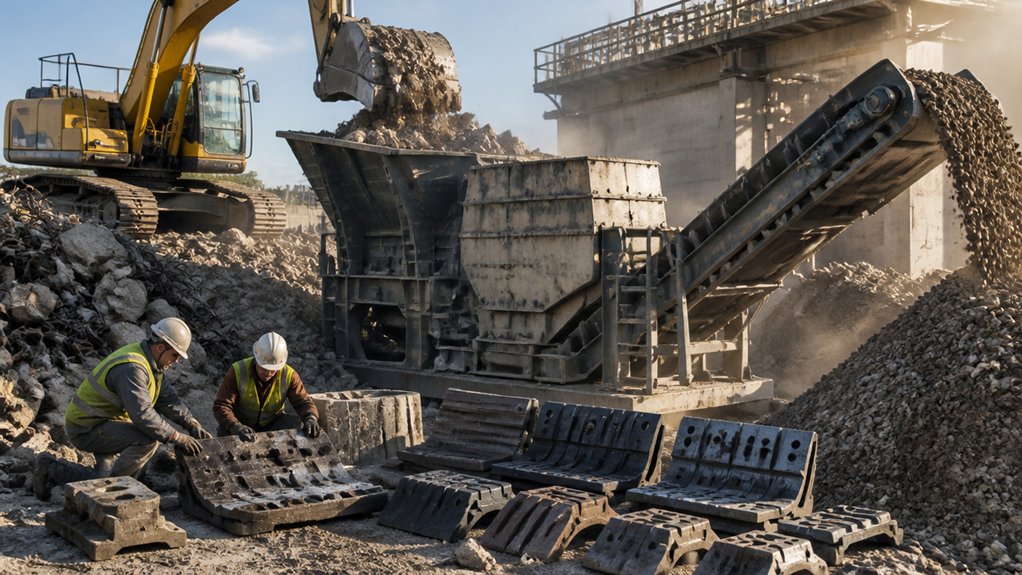
Start with the concrete feed, not the price tag. Aggregate size, hardness, shape, and contamination all affect wear-part life and crusher performance. Before choosing components, review feed samples and operating records.
Evaluate the concrete feed’s size, hardness, shape, and contamination before selecting crusher wear parts.
Large, angular pieces can create different impact and abrasion demands than small, rounded material. Hard aggregate may accelerate wear, while rebar, wire, and other contaminants can damage equipment or interrupt production.
Match wear-part materials and profiles to the feed and confirm they’re compatible with your crusher’s feed arrangement. Use consistent feed characterization to plan inspections and replacements around observed wear patterns. This can help reduce avoidable downtime and support steady processing.
When steel contamination varies, coordinate wear-part decisions with upstream removal and material separation practices. Reassess performance whenever feed sources change, and adjust specifications based on operating conditions.
Choose Crusher Liners for Output and Life
Choose crusher liners that balance throughput and wear life. A profile that increases production may also shorten replacement intervals, so evaluate both output and liner wear.
Match liner geometry and material to your feed’s hardness, abrasiveness, and size.
Track production, wear, and changeout intervals, then use those records to refine your selection and plan maintenance safely.
Balance Output and Wear
Crusher liner selection affects both production and service life. Choose a profile that can maintain your target tonnage without accelerating wear or causing frequent shutdowns. A more aggressive chamber may increase reduction and output, but it can also increase contact stress and shorten liner life.
Track tons processed, product size, power draw, and wear depth together to understand operating costs and identify changes early.
Keep equipment calibrated and settings consistent to avoid unnecessary liner loading. Inspect the chamber on a regular schedule, following safe work practices and applicable site procedures. Adjust the closed-side setting when wear begins to affect product gradation or throughput, and verify the change against your operating targets.
Check current MSHA requirements and other applicable regulations before planning inspection or maintenance work.
Schedule liner changes around production windows, and stage replacement parts in advance to reduce downtime. Manage material feed and remove contaminants where practical to limit interruptions and uneven wear.
Compare cost per ton across liner profiles using your operating data, then select the option that best supports your production goals, equipment condition, and maintenance plan.
Match Liners to Feed Material
Match liner material and profile to the feed’s hardness, abrasiveness, and particle shape. The right choice can support steady production while managing wear. For reinforced concrete, check the aggregate type and amount of steel in the feed before selecting jaw or impact crusher liners.
- Hard, abrasive feed: Consider wear-resistant alloys and profiles suited to sustained impact. Confirm the design fits your crusher and operating conditions.
- Variable feed: Choose liner geometry that can handle changes in material while maintaining the target product size.
- High steel content: Select liners suited to impact from steel and inspect them regularly for damage. Follow safe inspection and lockout procedures, and check current MSHA requirements.
After installation, track tonnage, product gradation, and liner wear. Use those records to guide your next selection instead of relying only on stated service-life expectations.
Evaluate any new liner material under your own operating conditions. Longer wear intervals may reduce changeouts, labor, and the environmental impact of manufacturing and disposal.
Optimize Screen Media for Recycled Aggregate
When processing recycled aggregate, choose screen media based on the feed’s abrasiveness, moisture, and particle shape—not just the target cut size. Match the aperture geometry and panel type to the material. Polyurethane can help resist abrasion and manage wet, sticky fines, while woven wire provides open area for dry, free-flowing material. Use self-cleaning panels when elongated concrete fragments or damp fines blind conventional openings.
Check deck angle, vibration, and feed distribution as part of routine troubleshooting. Uneven loading can reduce screening accuracy and concentrate wear in specific areas. Keep each deck’s openings suited to its separation duty rather than using one media type throughout the machine.
Verify material segregation with regular product checks, and adjust apertures or panel configuration when feed conditions change. Keep spare panels on hand so you can restore screening performance during planned maintenance. Follow site safety procedures during inspections and maintenance, and check current regulations for applicable requirements.
Measure Wear-Part Cost per Ton
Track wear-part cost per ton to compare options fairly. For each screen, add the part price, freight, and installation labor, then divide the total by the tons processed while the part was in service.
Use consistent production records so differences in feed, moisture, and operating hours don’t distort the comparison.
- Record direct costs: Include the part, freight, and installation labor.
- Measure production: Use verified scale data for material processed during the part’s service period.
- Compare under similar conditions: Evaluate wear-part materials in comparable operating conditions, not by purchase price alone.
Keep cost records separate by part type and machine position. Compare cost per ton alongside throughput and product quality to identify economical options that meet screening targets.
Document your assumptions so operators can review the results and use them consistently in future purchasing decisions.
Track Wear to Set Replacement Timing
Inspect wear parts at consistent intervals to identify when they’re approaching their replacement limits. Measure thickness, profile, and weight at the same locations each time, then compare your readings with the manufacturer’s minimum dimensions and your equipment’s operating history. Use a suitable gauge or caliper, and photograph high-wear areas to document uneven wear, cracks, or deformation.
Record feed material, throughput, and operating hours with each inspection. These details can help explain changes in wear rate and support better maintenance planning. If wear increases unexpectedly, consider whether material testing could identify abrasive or oversized particles contributing to the problem.
To evaluate wear part coatings, compare parts under similar operating conditions and track their service life. Set replacement thresholds using safe operating limits and measured wear trends—not appearance alone. Review inspection records after each run, and increase inspection frequency as readings approach the threshold.
Follow applicable safety requirements, check current MSHA regulations, and coordinate replacement planning with your maintenance team and equipment supplier.
Plan Changeouts to Reduce Downtime
Use wear records and inspection findings to plan changeouts before components reach their safe operating limits. Schedule the work during a planned maintenance window to reduce disruption to production.
Plan changeouts around wear data and inspections, scheduling them before components reach safe limits to minimize production disruption.
Before shutdown, confirm the scope of work and coordinate the crew, tools, lifting equipment, and replacement parts. Stage matched components near the work area, and assign removal, inspection, and installation tasks before the shift. Check fit and alignment during installation, then verify equipment calibration and settings before restart. Incorrect settings can accelerate wear or reduce throughput.
Follow site safety procedures and applicable MSHA requirements during isolation, removal, and restart; check current regulations before the work. Before returning the line to service, confirm restart criteria, complete the required test run, and verify that guards are in place and personnel are clear. Make handoff responsibilities clear so operators know the equipment’s status and any follow-up actions.
After the changeout, record the actual work duration and note fit, access, alignment, or other issues. Use those findings to improve labor estimates and parts staging for the next cycle. A repeatable plan supports uptime while keeping components within safe operating limits.
Frequently Asked Questions
How Should Wear-Part Inventory Be Managed Across Multiple Recycling Sites?
Standardize critical wear parts across sites where equipment and operating conditions allow. Set minimum stock levels for each site based on usage, supplier lead times, and the operational impact of a stockout. Pool slow-moving parts at a central location, with clear transfer procedures so crews can get what they need without unnecessary delays.
Maintain accurate inventory records and review them regularly against actual consumption. Coordinate replenishment, intersite transfers, and supplier schedules across locations. This helps reduce avoidable downtime while keeping parts available for safe, reliable operation. Check current MSHA requirements and applicable site procedures when planning maintenance and parts handling.
Can Reclaimed Wear Parts Be Refurbished Safely for Future Use?
Yes. Reclaimed wear parts can be refurbished for future use when they pass a qualified inspection and repair process. Start by checking for cracks, distortion, excessive wear, and other damage. Confirm dimensions and material against the equipment manufacturer’s specifications, then use an appropriate repair method and qualified personnel.
Before reinstalling a part, verify its hardness, fit, and structural integrity. Follow applicable site safety procedures and check current MSHA requirements. If a part’s condition or repair history is uncertain, replace it rather than risk equipment damage, downtime, or injury.
How Do Equipment Warranties Affect Wear-Part Selection?
Equipment warranties can affect which wear parts you choose and how you install them. Before ordering, review the warranty terms, approved-part requirements, and replacement procedures with your equipment supplier. Keep installation and maintenance records, and follow current safety and MSHA requirements. Then weigh part durability, cost, and operating efficiency against the need to protect warranty coverage and keep production running safely.
What Training Helps Operators Identify Abnormal Wear Early?
Train operators to inspect liners, belts, and bearings during routine checks. Show them how to compare wear with baseline photos and record changes each shift. This practical training helps crews spot abnormal wear early, plan maintenance, and reduce the risk of unplanned downtime. Include safe inspection procedures and follow applicable MSHA requirements; check current regulations for details.
How Should Suppliers Be Evaluated for Wear-Part Support?
Evaluate wear-part suppliers for material compatibility, delivery reliability, technical support, and documented wear performance. Compare warranty terms, service response, and replacement intervals using a total-cost analysis that accounts for downtime and operating conditions. Choose a supplier that can help keep equipment productive and support safe maintenance practices. Check current MSHA requirements when planning inspections, repairs, and part changes.