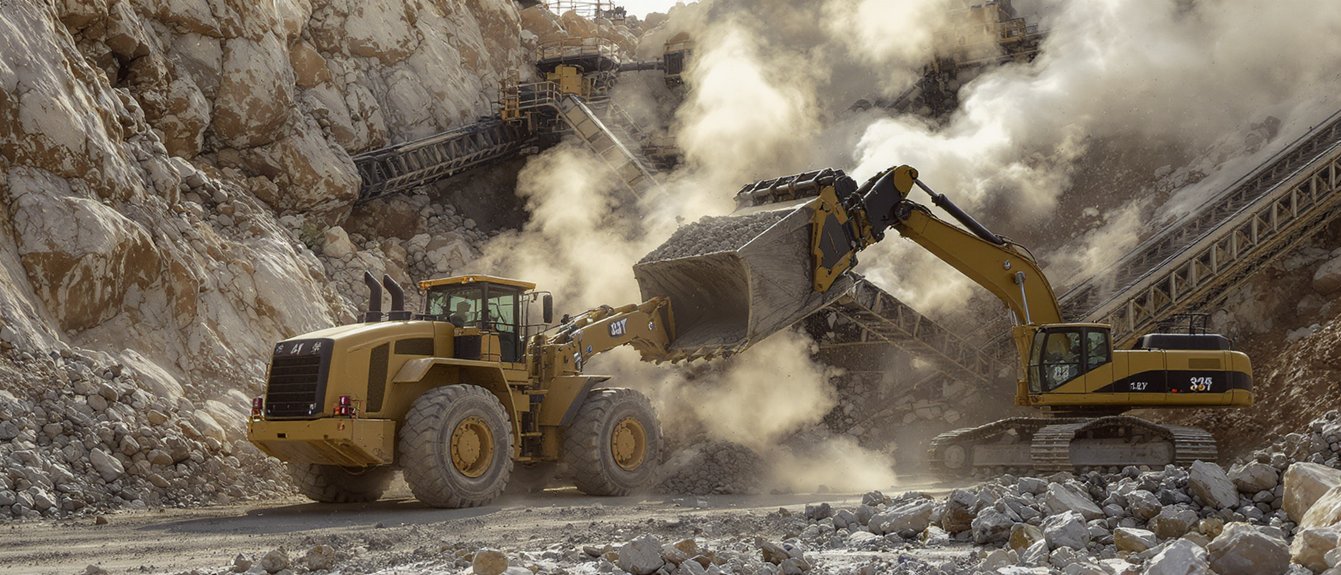
Choosing between a wheel loader and an excavator to feed a crusher affects production, material flow, and operating cost. On open, level ground, a wheel loader can shuttle between the stockpile and crusher. An excavator can feed from a fixed position, reach material beyond its immediate footprint, and handle oversized rock where space is limited.
Start by reviewing the crusher’s feed requirements, stockpile location, travel distance, and site layout. Then compare each machine’s cycle time, ability to maintain a steady feed, and visibility around workers and equipment. Plan safe travel paths, maintain clear communication, and follow applicable MSHA requirements; check current regulations for your operation. The fastest cycle alone doesn’t determine the best choice—the right machine is the one that supports consistent production and safe, reliable operation at your site.
How to Choose a Machine for Crusher Feeding
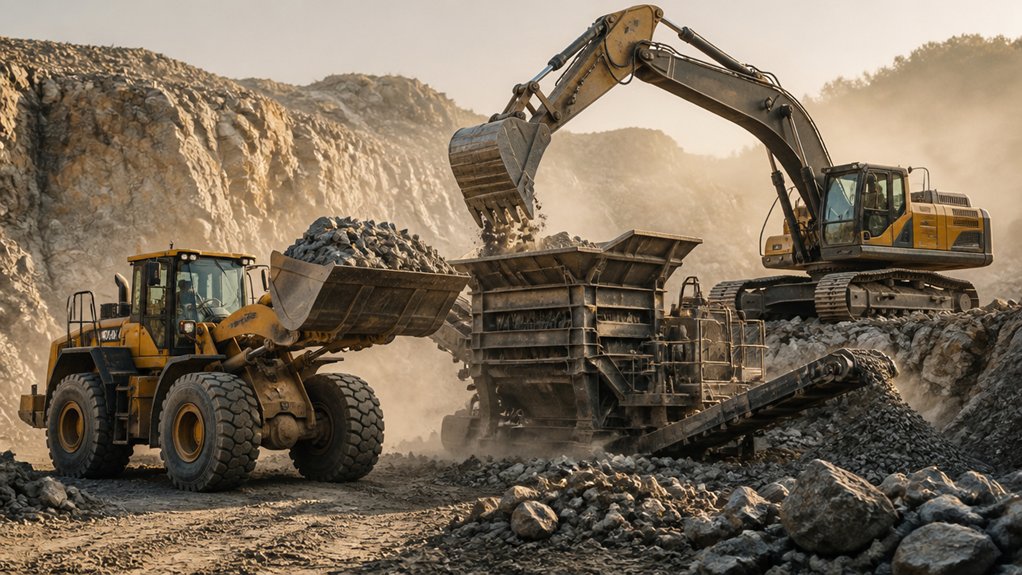
Choose a wheel loader or excavator for crusher feeding by matching the machine to your material flow, site layout, and production goals. Start by reviewing feed consistency, stockpile distance, ground conditions, and available turning space.
A wheel loader can be a good fit when operators need to move between several piles and reposition often. An excavator may suit a confined area or changing material face where reach and controlled digging are important.
Compare bucket capacity and cycle time with the crusher’s feed requirements. An undersized machine may limit production; an oversized one can add fuel use and create congestion.
Map travel paths and check sightlines so operators can approach the crusher safely and keep clear of other equipment. Account for tire or track wear, idle time, and fuel use when evaluating operating efficiency.
Before choosing, review service access, parts availability, and expected duty cycle with your equipment supplier and operators. Select a machine that can maintain the required feed without disrupting site traffic or adding avoidable operating costs.
Confirm that the feeding plan follows applicable MSHA requirements, and check current regulations before putting it into practice.
How Wheel Loaders Feed a Crusher
A wheel loader feeds a crusher by scooping material from a stockpile, carrying it to the feed hopper, and placing it in controlled loads. Match the bucket load to the crusher’s intake and the material’s size, density, and moisture. Oversized loads can bridge the hopper or overload the feeder; loads that are too small can reduce throughput.
Approach the hopper squarely, raise the bucket only as high as needed, and release the material smoothly. Watch the hopper level and feeder response, adjusting each pass to maintain a steady feed and avoid surges or starvation. Keep the travel route clear, stay back from the hopper edge, and follow site signals.
Wear the seat belt, use the cab’s protective equipment, and never allow anyone beneath a raised bucket. Follow site safety procedures and check current MSHA requirements.
How Excavators Feed a Crusher
An excavator feeds a crusher from a fixed position, using its boom, stick, and bucket to move material from the stockpile into the hopper. Controlled bucket placement helps maintain a steady feed while reducing the risk of overloading the crusher or striking its components.
To keep material moving safely and consistently:
- Match bucket loads to the crusher’s capacity and the site’s feed plan.
- Break oversized material before placing it in the hopper.
- Keep the bucket clear of hopper edges and crusher components.
- Watch for bridging or uneven material, and pause feeding when the hopper needs attention.
Before starting, inspect the excavator, bucket, and work area. Confirm exclusion zones and communication procedures with the crusher operator, and follow applicable site safety rules and current MSHA requirements. Never reach into the crusher or work beneath a suspended load.
Which Machine Offers Better Reach and Flow?
For reach, an excavator can feed material into a crusher from a stationary position, while a wheel loader must travel between the pile and the hopper. The excavator’s reach can cover a wider feed area with less repositioning, but its cycle rate depends on bucket size, swing angle, and operator control.
A loader can provide a steady feed when the route is short and the dumping area is clear.
Compare the machines by tracking tonnes per hour, travel time, and crusher starvation—not bucket capacity alone. Before work begins, establish separation between machines, confirm the ground is stable, maintain clear sightlines, and keep personnel outside the operating zone.
Place material carefully to reduce bridging and avoid impacts that could damage the crusher. Match the feed rhythm to crusher demand: surges can disrupt operation, while gaps leave capacity unused.
Follow applicable MSHA requirements and check current regulations for your operation.
Which Machine Fits Your Site and Material?
Your site layout and access determine whether a loader’s maneuverability or an excavator’s reach is the better fit for feeding the crusher. Match the machine to the material’s size, density, and consistency, then confirm it can reach the feed area safely and maintain a steady flow.
Check the crusher’s feed height, hopper geometry, and required production rate before choosing equipment. Also review site traffic patterns and applicable MSHA requirements, and check current regulations to support safe, efficient operation.
Site Layout and Access
Start with the crusher’s access routes, available working space, and feed material when choosing between a wheel loader and an excavator. A loader is often the practical choice on an open, level site where it can travel directly between the stockpile and hopper.
An excavator can work well in a tighter layout if it can sit in a stable position beside the crusher and feed by swinging, reducing repeated travel.
Before selecting equipment, walk the site and check turning room, ground conditions, ramp grades, and overhead clearance. Confirm that operators can see the hopper and that the layout keeps people out of machine travel and work zones. Plan clear access for service vehicles and emergency response.
- Choose a loader when travel paths are wide, stable, and unobstructed.
- Choose an excavator when space is limited and the machine can feed safely from a stationary position.
- Set separation zones and confirm stable operating positions before production begins.
- Preserve access to inspection points and service areas to support routine maintenance.
Review the site layout against applicable MSHA requirements, and check current regulations before work begins.
Material Type and Consistency
Material type and consistency affect how reliably each machine can feed the crusher. A wheel loader works well with loose, free-flowing material that can be scooped quickly from a stockpile. It can also adapt to changing pile faces, but digging may separate coarse and fine particles and cause material segregation.
For sticky clay, wet fines, or mixed demolition debris, an excavator offers more control over each bucket. Operators can select material from specific layers, remove oversized pieces, and avoid unsuitable zones. This precision helps maintain a consistent feed when the stockpile varies.
However, cohesive material may cling to the bucket, slowing cycles and reducing the volume delivered to the crusher.
Match the machine to the material’s moisture, particle size, and cohesion. Then assess how consistently it can deliver material throughout the shift. Check bucket condition and loading practices, and adjust the approach if material buildup or segregation disrupts the feed.
Crusher Feeding Requirements
Start with the crusher’s feed requirements: target production rate, feed opening, and tolerance for oversized or inconsistent material. Match the loader or excavator’s bucket capacity and cycle time to the required throughput. Confirm that material fits the opening and can be fed without bridging.
- Choose a wheel loader for fast, repeatable loading from a stockpile when there’s room to maneuver.
- Choose an excavator when selective digging, precise placement, or handling large pieces is a priority.
- Use a grizzly to separate oversize material or a breaker to reduce it. Don’t rely on the operator alone to prevent blockages.
Before selecting equipment, check haul distance, ground conditions, and stockpile layout. Consider maintenance access to wear parts, tires or tracks, and hydraulic components.
Establish crusher-side exclusion zones, clear communication signals, and a controlled feeding procedure. Follow applicable MSHA requirements and check current regulations.
Track actual tonnage and watch for surges or gaps in feed. Adjust bucket size, loading method, or cycle rate to keep material moving steadily and reduce the risk of crusher blockages or starvation.
How Do Costs Compare for Crusher Feeding?
Crusher-feeding costs depend on more than purchase price. Fuel, labor, maintenance, downtime, and tons delivered all affect cost per ton. Compare equipment under your site’s actual conditions, including haul distance, material size, crusher location, and required feed rate.
Compare crusher-feeding equipment under actual site conditions, weighing fuel, labor, maintenance, downtime, and tons delivered—not just purchase price.
A wheel loader can move between stockpiles and the crusher, but travel and idling may increase fuel use. An excavator can feed from a nearby pile and manage oversized material, though repositioning or slower cycles may affect output.
Review each machine’s travel path and work area to support safe, efficient operation, and check current MSHA requirements for applicable site activities.
Calculate cost per ton by dividing total operating costs by the tons delivered during the same period. Track fuel, operator hours, downtime, tire or track wear, and maintenance over representative shifts.
Compare the results alongside feed rate and production consistency—not hourly operating cost alone. Choose the machine that meets your production target at the lowest verified cost per ton, and reassess when site layout or production demands change.
Frequently Asked Questions
How Often Should Crusher-Feed Equipment Be Inspected?
Inspect crusher-feed equipment before every shift and after any impact, unusual noise, or operating change. Check for wear, damage, loose components, and material buildup, and address issues before they disrupt production or create a safety risk. Ask operators to report defects promptly, document findings and repairs, and follow your site’s maintenance procedures. Check current MSHA regulations for applicable inspection and recordkeeping requirements.
What Safety Measures Help Prevent Blockages at the Crusher Hopper?
Prevent crusher hopper blockages by controlling feed size, loading material steadily, and keeping personnel clear of the hopper and moving equipment. Use grizzlies or other approved screening methods to remove oversized material, and monitor the feed for bridging or restricted flow. If a jam occurs, follow site procedures: stop and isolate the equipment, apply lockout/tagout, and verify it is safe before anyone attempts to clear the blockage. Follow applicable MSHA requirements and check current regulations.
Can Wheel Loaders and Excavators Work Together During Crusher Feeding?
Yes. Wheel loaders and excavators can work together to feed a crusher when the equipment is compatible and each machine has a clearly defined role. Set traffic routes and communication procedures, keep machines and workers clear of one another, and coordinate loading to maintain a steady hopper supply without overfilling. Review the setup with operators before each shift, follow applicable MSHA requirements, and check current regulations.
How Can Operators Reduce Dust While Feeding a Crusher?
Reduce dust while feeding a crusher by combining dust suppression with controlled material handling. Apply water sprays at transfer points and keep material damp, while avoiding excess moisture that could affect processing. Feed the crusher steadily, avoid overfilling the hopper, and minimize drop heights to limit dust generation and spillage. Keep crusher enclosures and dust-extraction systems in good working order, and inspect them regularly. Train operators to follow site procedures and current MSHA requirements; check applicable regulations for your operation.
What Training Should Crusher-Feeding Operators Receive?
Crusher-feeding operators should receive equipment-specific training on controls, load management, crusher limits, and emergency response. Train operators on practical safety procedures, including exclusion zones, lockout/tagout, clear communication, and dust control. Before allowing independent operation, have a qualified supervisor verify each operator’s competence through supervised, site-specific assessments. Align training with applicable MSHA requirements, and check current regulations and site procedures.