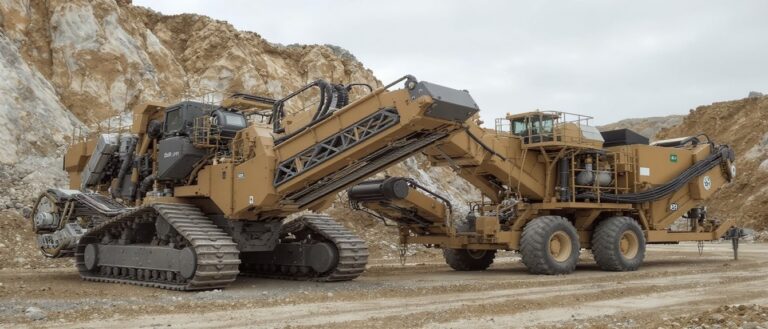
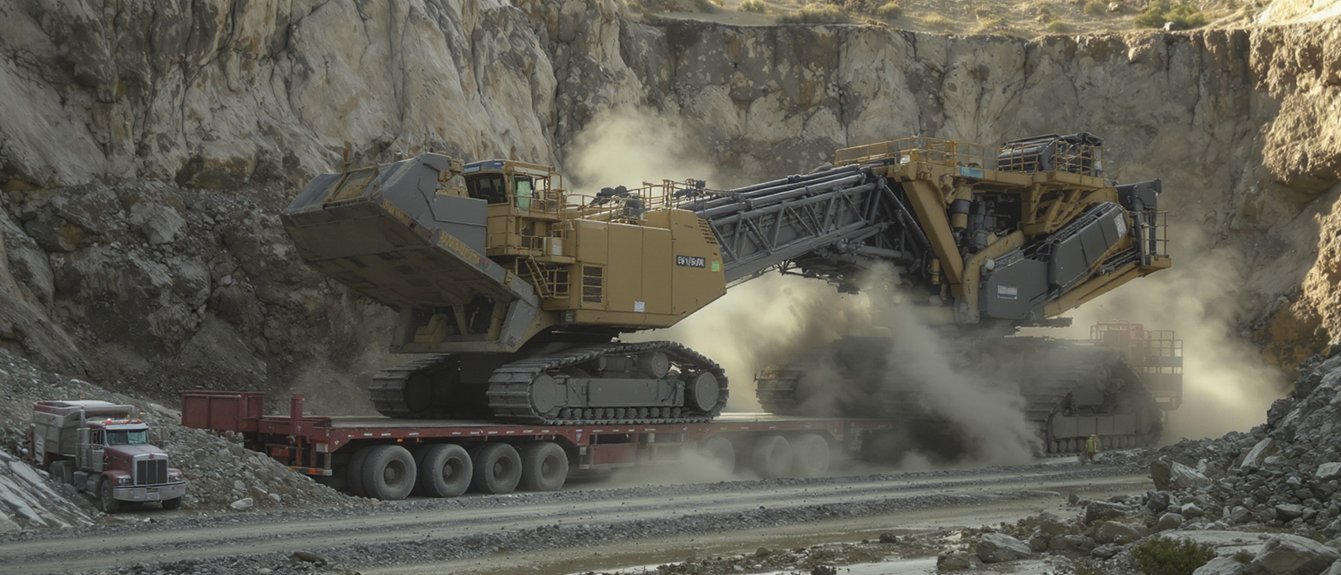
Moving a crawler-mounted impactor from the highway to the pit takes careful planning at every stage. Before delivery, confirm permits, route restrictions, bridge and road capacity, ground conditions, and site access with the carrier and equipment supplier. Prepare the work area for unloading, positioning, and commissioning, with clear travel paths and controls for workers and nearby equipment. Follow applicable MSHA requirements and check current regulations before work begins. Once the impactor is operating, monitor feed size and rate, adjust settings to support product quality, and coordinate maintenance with production. Resolving constraints early helps protect the schedule, keep crews safe, and maintain spec production.
Plan Permits, Routes, and Impactor Access
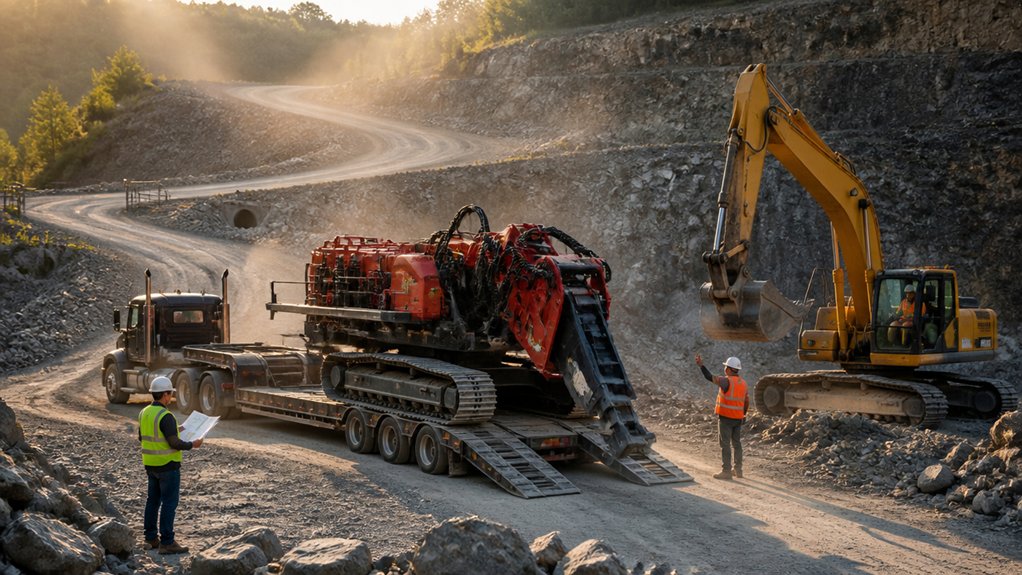
Before moving a crawler-mounted impactor, secure the required permits and confirm that the planned route can accommodate the machine’s transport dimensions, weight, and ground pressure. Check axle limits, bridge capacities, overhead clearances, turning radii, and any restrictions on public roads. Verify that private-road access is authorized and that the route provides safe access to the operating area without exceeding posted or permitted limits.
Coordinate with transportation authorities, utility owners, and property managers to obtain approvals. Arrange escorts or temporary traffic controls where required, and confirm who’s responsible for putting them in place.
Review applicable environmental requirements, including protected areas, drainage crossings, noise limits, emissions restrictions, and operating hours. Check current regulations and permit conditions, including applicable MSHA requirements.
Notify nearby residents and businesses about the move’s timing, expected traffic impacts, and a contact for questions or concerns. Before dispatch, document the approved route, permit conditions, responsible contacts, and contingency routes or procedures.
Recheck route conditions, approvals, and notifications whenever the schedule or route changes.
Prepare the Site for Impactor Delivery
Once the route and permits are confirmed, prepare the site for safe, efficient unloading and positioning of the crawler-mounted impactor.
- Clear debris, loose rock, and parked vehicles from the unloading area and travel path.
- Grade the pad to provide firm, level support. Confirm that the ground can support the truck, crane, and machine without settlement.
- Mark exclusion zones, set barriers, and keep workers clear of suspended loads and reversing equipment.
- Check for overhead power lines, underground utilities, drainage issues, and nearby structures before unloading.
- Provide adequate lighting and assign a spotter with reliable radio communication.
- Keep access clear for emergency vehicles.
- Review the lift plan, required PPE, and weather limits with the crew. Confirm roles and communication before work begins.
- Check equipment calibration before lifting operations, as required by the lift plan.
Follow applicable MSHA requirements and check current regulations before work begins. Clear roles, controlled access, and a prepared unloading area help reduce delays and support safe equipment positioning.
Position and Commission the Impactor
With the unloading area secured, position the crawler-mounted impactor on firm, level ground in accordance with the lift plan and manufacturer’s instructions. Keep it clear of overhead hazards, soft shoulders, and traffic routes. Set the parking brake, lower the stabilizers if equipped, and confirm the chassis is level before commissioning.
Use this sequence to verify the machine is ready:
- Establish the work area. Set an exclusion zone, wear required PPE, and check that guards are in place and emergency stops are accessible and functional.
- Inspect the machine. Check hydraulic lines, electrical connections, belts, fasteners, and fluid levels. Correct leaks or loose components before startup.
- Calibrate and test. Follow the manufacturer’s instructions for equipment calibration. At idle, test alarms, interlocks, controls, and conveyor movement.
Start the engine only after personnel are clear of the machine. Watch for unusual vibration, noise, heat, or warning indicators. If you find a fault, shut down, address it, and verify the correction before authorizing operation.
Follow applicable MSHA requirements and check current regulations.
Control Feed Size and Rate to Meet Specs
To meet product specifications, control both the material entering the impactor and the feed rate. Set the feed opening and upstream scalping screen to control top size and remove fines or clay that could cushion impacts or restrict material flow.
Control feed size and remove fines or clay to maintain consistent impactor performance and product quality.
Keep oversized pieces out of the hopper; they can bridge the opening, overload the rotor, and cause inconsistent breakage. Match the feed blend to the impactor’s rated capacity and the target product gradation.
Use the feeder controls to maintain a steady, even stream across the full rotor width. Avoid surges, gaps, and one-sided loading, which can reduce crushing efficiency and increase component stress.
Adjust the feed rate gradually as material hardness and moisture change or truck arrivals vary. Coordinate loader cycles with the feeder to prevent flooding the hopper or starving the impactor.
Follow the equipment manufacturer’s operating limits, and check current MSHA requirements for applicable safety practices.
Check Product Quality and Adjust the Setup
As the impactor runs, sample the discharge at regular intervals and compare the gradation with the target specification. Collect representative samples across the belt using safe sampling procedures; a sample from one spot may not reflect the full product stream. Check particle size, fines content, and particle shape. Record each result along with the time, feed conditions, and machine settings.
If results drift, follow your site’s safety procedures and pause production before making adjustments. Check the screen condition and closed-side setting if the product is oversize. If the product contains excess fines, consider reducing rotor speed or feed rate, then collect a fresh sample.
For uneven gradation, inspect feed distribution and wear parts before changing settings. Make one adjustment at a time and verify its effect with a fresh sample. Document each setup change and the measured result so operators can repeat settings that meet the specification.
Resume full production only after successive samples show consistent gradation. Follow applicable MSHA requirements and check current regulations before sampling or servicing equipment.
Frequently Asked Questions
What Materials Can Crawler-Mounted Impactors Process?
Crawler-mounted impactors can process concrete, asphalt, demolition debris, limestone, and other soft-to-medium-hardness rock. For reliable production, match the feed size and material hardness to the machine’s operating limits, and remove unsuitable metal or oversized material before it reaches the crusher. Processing suitable material on-site can reduce hauling and support recycling. Follow site safety procedures and check current MSHA requirements for applicable operations.
How Do Crawler-Mounted Impactors Compare With Stationary Crushing Plants?
Crawler-mounted impactors can be moved closer to the material, reducing haulage and allowing crews to set up at changing work areas. Remote operation can also help operators work from a safer position when the equipment and site procedures support it. Before moving a unit, plan access, ground conditions, setup, and safe work zones, and confirm that operators follow site procedures and current MSHA requirements.
Stationary crushing plants are better suited to long-term operations that need consistent production and a stable process. Compare the options based on material flow, haul distance, expected run time, site layout, and maintenance access. For changing sites or shorter campaigns, mobility may improve overall productivity; for sustained production, a stationary plant may provide a better fit.
What Are the Typical Operating and Maintenance Costs?
Operating costs typically include fuel, wear parts, labor, and transportation. Maintenance costs cover routine inspections, servicing, and component replacement. To build an accurate cost picture, track fuel and parts use, labor hours, downtime, and production over time. Use those records to adjust maintenance schedules to site conditions and production targets, while following equipment safety procedures and checking current MSHA requirements.
How Much Operator Training Is Required?
Plan on several days to two weeks of supervised training, depending on the operator’s experience and the machine’s complexity. Before training, confirm applicable certification and site requirements, and check current MSHA regulations. Cover controls, pre-operation checks, safe setup, troubleshooting, and routine maintenance with hands-on practice. Have a qualified supervisor verify that the operator can perform each task safely before authorizing independent operation.
What Safety Features Protect Workers Around the Machine?
Guarded pinch points, emergency stops, alarms, cameras, access interlocks, and clearly marked exclusion zones help protect workers around the machine. Before operating, performing maintenance, or clearing a blockage, follow site safety procedures, wear the required PPE, and review the applicable emergency steps. Keep guards and interlocks in place, and verify that workers understand the exclusion zones and how to stop the machine. Follow applicable MSHA requirements and check current regulations for your operation.