Choosing the right crusher for your material can improve throughput, product shape, wear life and operating costs. Start by assessing hardness and abrasiveness, then confirm the feed size and required product. Jaw, cone and impact crushers handle these conditions differently, so a poor match can increase wear or restrict production. Compare each machine’s strengths and trade-offs against your material and operating goals, and include safe access and maintenance needs in the selection process.
Compare Crushers by Hardness and Feed Type
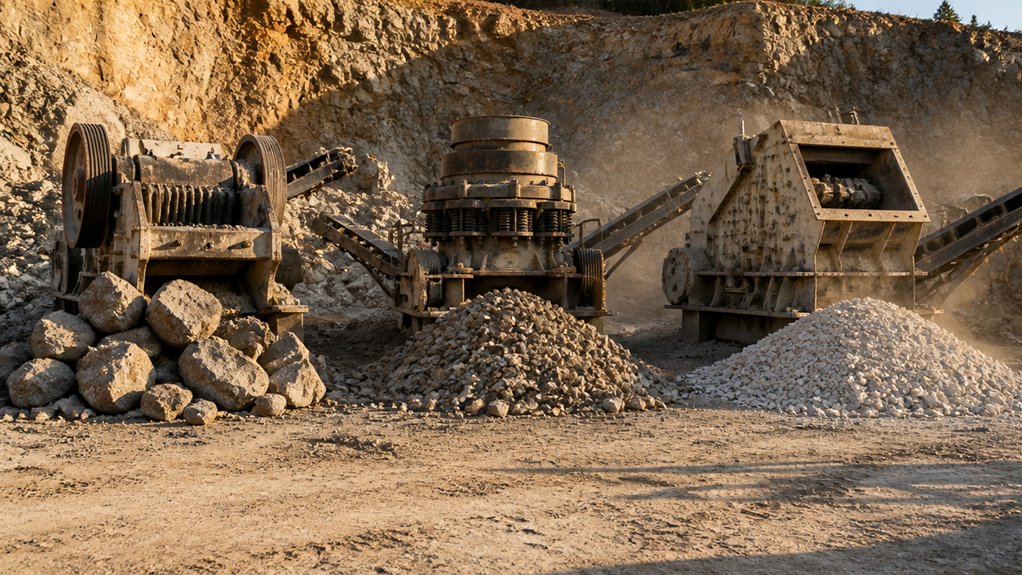
Choose a crusher by evaluating hardness, abrasiveness, feed shape, moisture, and target product size—not hardness alone. For softer, friable material, an impact crusher can provide strong reduction and a cubical product. However, abrasive feed can increase wear and maintenance needs.
Choose an impact crusher for softer, friable feed, but consider abrasiveness, wear, and maintenance needs.
Harder, tougher material is often better suited to compression crushing. Check how consistently material feeds the machine and whether slabs, excess fines, or moisture could interrupt flow.
Before selecting equipment, compare the crusher opening and operating range with the feed’s maximum size and required output. Review the material’s fracture behavior, expected production demands, wear-part replacement needs, and access for inspections and maintenance.
These checks help match the machine to actual site conditions, support steady production, and reduce premature wear and unplanned downtime.
Include safe access and maintenance procedures in the selection and operating plan. Follow applicable MSHA requirements, and check current regulations for your operation.
Choose Jaw Crushers for Hard, Abrasive Rock
When processing hard, abrasive rock, a jaw crusher can provide a practical primary crushing stage. Its moving jaw compresses material against a fixed jaw, breaking it into smaller pieces. This straightforward design can handle tough feed, but abrasive material can increase wear and maintenance needs.
Before choosing a crusher, assess the feed’s maximum size, hardness, abrasiveness, and moisture. Match the feed opening and rated capacity to your material and production goals, and manage oversize rock to reduce the risk of blockages.
Select suitable wear-resistant jaw plates, then inspect them regularly for wear or damage. Adjust the discharge setting to meet your target product size, and monitor power draw, throughput, and product consistency to spot operating changes early.
Keep personnel clear of the feed and discharge areas, and follow site procedures for clearing blockages and performing maintenance. Check current MSHA requirements and applicable site rules.
With appropriate sizing, routine inspections, and safe operating practices, a jaw crusher can support dependable reduction of hard feed.
Choose Cone Crushers for Uniform Hard-Rock Output
For secondary or tertiary hard-rock crushing, a cone crusher uses compression between the mantle and concave liner to produce a consistent product. Start by setting the closed-side discharge gap to suit your target product size and feed conditions, then check the finished material to confirm the result.
Maintain an even feed to support steady throughput and predictable grading. Avoid surges, gaps and oversized material that could choke the chamber. Select a liner profile suited to the rock’s abrasiveness and feed size, and inspect it regularly.
As the liner wears and the discharge gap widens, adjust the crusher to maintain the required product.
Keep the crusher and surrounding work area safe, and follow applicable MSHA requirements; check current regulations for your operation. A steady feed, routine wear checks and timely setting adjustments help improve production consistency and support reliable downstream screening.
Choose Impact Crushers for Soft, Brittle Materials
Impact crushers for soft, brittle materials
Impact crushers are a practical choice for materials that break readily under repeated blows, including limestone and some recycled concrete. They can produce cubical particles and controlled gradations when the feed fractures cleanly instead of resisting compression.
Before selecting a crusher, check the feed size, moisture level, and clay content. Wet or sticky material can build up in the chamber, restrict flow, and reduce consistency. Match rotor speed, impact settings, and screen openings to the target product, then test the setup with representative samples.
If feed conditions vary, confirm that the crusher and circuit can handle the expected range without disrupting production. Review adjustable operating settings and the overall circuit layout as part of the selection. For hard, abrasive inclusions, reassess whether an impact crusher is appropriate before committing.
During setup and operation, follow site safety procedures and check current MSHA requirements.
Compare Crusher Wear, Shape, and Operating Costs
Compare crushers by wear rate, product shape and total operating cost. Jaw crushers are well suited to abrasive feed and use robust, replaceable plates. Their product can be angular, so you may need secondary crushing or shaping to meet specifications.
Cone crushers perform well in hard, abrasive applications. Their liners wear over time, and adjusting the crusher can help control product size and shape.
Impact crushers can produce more cubical particles, but their blow bars and liners may wear faster when processing abrasive rock.
To compare operating costs, consider energy use, wear-part cost, replacement frequency, labor and downtime—not just the purchase price. Match the crusher to your feed material, then confirm that it can meet your throughput and product requirements.
For variable feed, account for adjustment time and wear monitoring in your operating plan. Follow applicable safety procedures and check current MSHA requirements.
The best choice is the crusher that consistently meets your production targets and product specifications with manageable maintenance and downtime.
Frequently Asked Questions
How Can Moisture Content Affect Crusher Performance and Material Flow?
Moisture can reduce crusher throughput by making material sticky, increasing buildup and clogging, and slowing discharge. To maintain steady flow, monitor feed moisture, improve drainage where practical, and adjust crusher settings as conditions change. Check for buildup safely and follow site procedures and current MSHA requirements.
What Site Conditions Influence Crusher Selection and Placement?
Before selecting and placing a crusher, walk the site with operations, maintenance, and equipment-supplier representatives. Evaluate terrain, access roads, ground-bearing conditions, drainage, available utilities, and haul distances. Use these findings to identify a location that supports safe equipment access, efficient material flow, and practical maintenance.
Also review noise, dust, vibration, permitting, and other environmental constraints. Confirm foundation and traffic-control needs, and check current MSHA requirements and applicable local regulations before finalizing the layout.
How Can Operators Reduce Dust and Noise Around Crushing Equipment?
Apply dust-suppression sprays or foggers at transfer points, enclose conveyors where practical, and keep seals in good condition. To reduce noise, install acoustic barriers, isolate equipment, and maintain liners and bearings. Require hearing protection where needed, monitor worker exposure, and review controls regularly to support safe, reliable production. Check current MSHA requirements when planning or updating controls.
What Safety Checks Should Be Completed Before Starting a Crusher?
Before starting a crusher, inspect guards, emergency stops, belts, lubrication systems, and the surrounding work area. Confirm that equipment is properly calibrated and alarms function as intended. Verify that trained, authorized personnel are operating the crusher, and make sure everyone is clear of moving parts and other hazards. Follow the site’s lockout/tagout procedures before performing inspections or maintenance, and remove locks only when the equipment is ready to start. Follow applicable MSHA requirements and check current regulations and site procedures before operation.
How Often Should Crusher Components Be Inspected and Maintained?
Inspect crusher components daily before startup and after any unusual vibration, blockage, or overload. Follow the manufacturer’s lubrication schedule, check wear parts each shift, and document findings. Plan replacements based on measured wear, operating conditions, and safety limits. These routine checks help reduce unplanned downtime and support safe, reliable operation. Always follow applicable MSHA requirements and check current regulations.