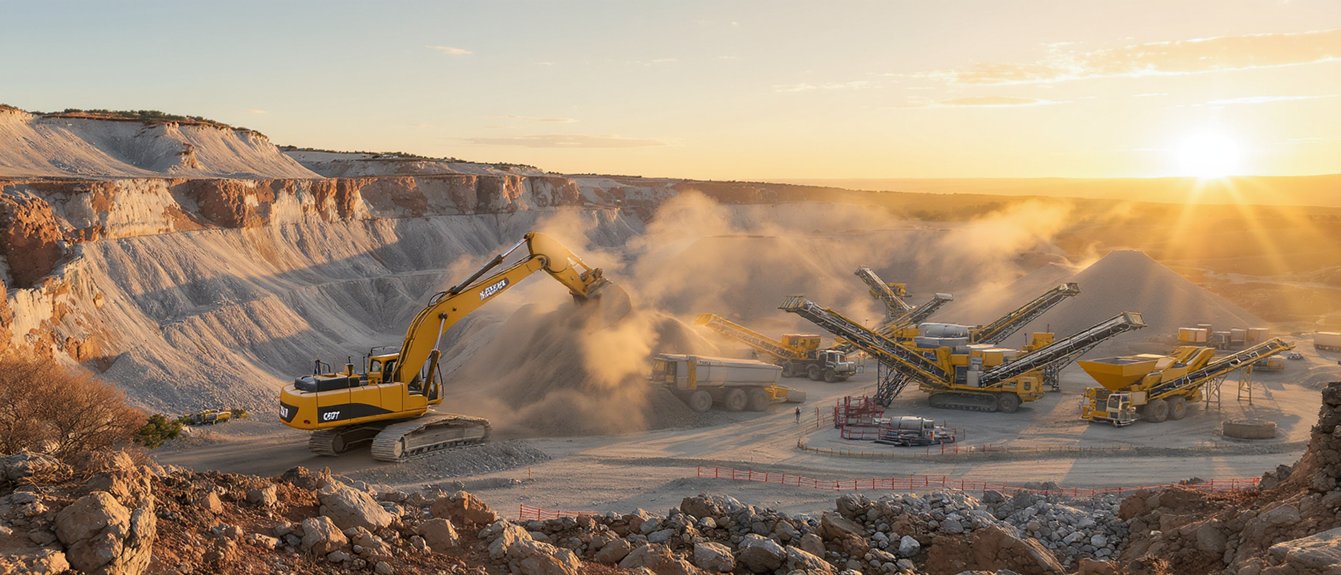
Starting an aggregate quarry means selecting equipment that fits your production goals, rock type, site layout, and budget. You’ll need a coordinated setup for drilling and excavation, material handling, crushing, screening, and stockpiling, plus systems that support safe, reliable operation. Oversized equipment can tie up capital and increase operating demands; undersized equipment can limit throughput and disrupt the production flow. Start by defining your target production and material characteristics, then use those requirements to plan the equipment sequence and check that it supports safe, efficient operation. Review applicable MSHA requirements and current regulations as part of the planning process.
Plan Your Quarry Equipment Around Production Needs
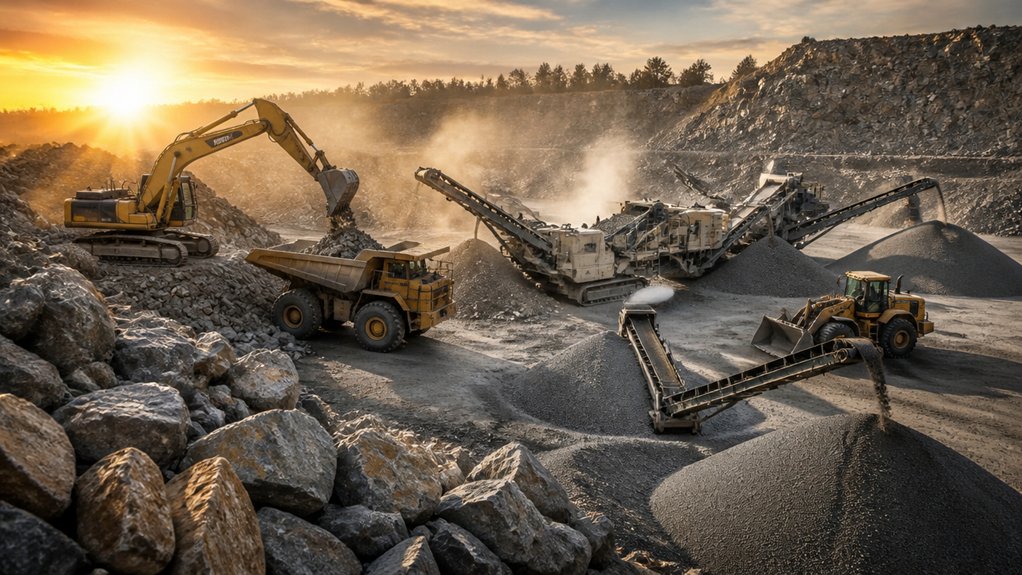
Start by defining the material you’ll extract, your target production rate, and your site conditions.
Define your material, production target, and site conditions before choosing equipment.
Estimate daily and annual output using realistic operating hours, maintenance windows, and seasonal limits.
Then match the capacity of each machine and processing stage to the next stage’s needs. This helps prevent bottlenecks without investing in equipment that will sit idle.
Check haul distances, road access, power availability, and space for stockpiles and service areas.
Plan clear traffic routes, reliable communications, and safe access for inspections and repairs.
Review dust, noise, water, and fuel-management needs when selecting equipment and site systems.
Compare ownership and rental options, parts availability, and local service support.
Before committing capital, confirm that your plan aligns with permits, current MSHA requirements, and your expansion goals.
Check current regulations and consult qualified safety and environmental professionals as needed.
Excavate Rock With Drills and Excavators
Drill rock to the required depth and pattern, following your site plan and applicable safety procedures.
Select an excavator based on the material, digging conditions, reach, bucket capacity, and production needs.
Coordinate drilling and excavation so crews can manage blasted material safely, keep haulage moving, and reduce equipment downtime.
Review current MSHA requirements and site-specific procedures before work begins.
Drilling Rock Formations
Efficient rock excavation depends on a drilling plan that supports safe blasting, consistent fragmentation, and steady material flow. Start by assessing rock hardness, joint spacing, and groundwater conditions. Use that information to set hole depth and spacing and coordinate the drilling pattern with the approved blast plan and production needs.
- Choose rotary or down-the-hole drilling based on the rock conditions, required hole diameter, and equipment available on site.
- Keep holes on pattern and clear of cuttings. Check alignment during drilling; deviations can affect fragmentation and increase oversize.
- Coordinate drilling and excavation so crews can clear broken rock safely and maintain a consistent feed to the crusher.
After each round, review penetration rates, bit wear, and fragmentation. Use the findings to adjust drilling practices, manage operating costs, and address hazards such as unstable faces and flyrock.
Follow site permits, approved blast plans, and exclusion zones. Check current MSHA requirements and applicable regulations before work begins.
Excavator Selection
Excavator selection
Choose an excavator based on rock fragmentation, haul distance, and required production. Match the machine’s operating weight, bucket capacity, and breakout force to the blasted material and loading conditions. Well-fragmented rock may load efficiently with a general-purpose bucket. Oversized material may call for a heavier excavator, a rock bucket, or a hydraulic breaker.
Don’t size the excavator by bucket volume alone. Confirm that its reach and lift capacity suit the loading position and haul trucks, and that the machine can work safely on the available ground. Compare expected hourly output with fuel use, transport requirements, and purchase or rental costs.
Include track excavator maintenance in your lifecycle-cost estimate. Check undercarriage wear, hydraulic condition, and bucket teeth, and set inspection intervals that fit operating conditions. Keep critical parts available to reduce avoidable downtime.
For excavator safety, provide stable working surfaces, maintain clear visibility, and select protective structures suited to site hazards. Establish safe operating procedures and check current MSHA requirements that apply to your site and equipment.
Coordinating Drill And Excavator Work
Coordinating drilling and excavator work
Coordinate drilling and excavation so each blast produces material your excavator can load safely and efficiently. Work with your blaster to match hole spacing, depth, and burden to site conditions and the target fragment size. Before work begins, review the blast plan with the drill and excavation crews. Confirm exclusion zones, access routes, communication methods, and firing signals.
- Inspect drill steel, bits, hoses, and dust-control equipment daily. Schedule maintenance before wear compromises hole accuracy or production.
- After blasting, check for misfires, unstable faces, and loose material. Keep the excavator out of the loading area until it has been cleared for entry.
- Set up the excavator on firm, level ground outside the face’s fall zone. Maintain clear radio contact, and keep haul trucks outside the excavator’s swing radius.
- Follow applicable MSHA requirements and check current regulations for your operation.
After each blast, track fragmentation and loading rates. Review the results with your blaster and adjust the drilling pattern as needed to limit oversize, support safe excavator work, and maintain a steady feed to the crusher.
Move Quarry Material With Loaders and Haul Trucks
Select wheel loaders with bucket capacity and breakout force suited to the material, loading conditions, and production targets.
Match haul truck payloads to loader capacity, haul distance, road conditions, and dumping requirements.
Coordinate loading, hauling, and dumping, and adjust the fleet plan as site conditions change to reduce delays and keep material moving safely.
Check current MSHA requirements and site procedures when planning equipment operations.
Select Wheel Loaders
Choose a wheel loader that matches your quarry’s material, production targets, and haul-truck fleet. Size the bucket and assess breakout force for the material’s density, fragmentation, and loading conditions. The goal is to load each truck efficiently while avoiding unnecessary passes, spillage, and overloading.
Evaluate visibility, control response, and operator comfort, too. These factors support safe, consistent loading over long shifts.
- Compare rated payload and available bucket options with the material’s measured bulk density.
- Assess expected cycle times, fuel use, and tire wear when comparing loader productivity.
- Confirm parts availability, service support, and recommended inspection intervals before purchase.
Quarry loaders must operate reliably in dust, vibration, and changing ground conditions. Select tires and protective features suited to the site, and schedule maintenance according to operating hours and service guidance.
After commissioning, track fuel use, idle time, and cycle performance. Use the results to refine operating practices and support equipment availability.
Review applicable mine safety requirements, including current MSHA regulations, and confirm that operating and maintenance procedures meet them.
Size Haul Trucks
Size haul trucks to match the loader’s bucket, loading cycle and production target. Select a truck body that reaches rated payload in a practical number of passes without exceeding the truck’s weight limits. Account for bucket capacity, material density and swell to confirm the loader can fill the truck efficiently.
Next, evaluate haul distance, grades, turning radius, road conditions and dump-point access. Use these factors to choose an appropriate truck class and drivetrain. Avoid sizing by volume alone: balance payload and cycle time with fuel use, tire costs and purchase price.
Confirm that the fleet can handle expected loads while allowing for scheduled downtime.
Before purchasing, check parts and technician availability. Establish maintenance schedules for inspections, lubrication, tire checks and servicing. Make sure operating and maintenance practices align with applicable safety requirements, including current MSHA regulations.
Reassess truck capacity as production plans change.
Coordinate Material Flow
Coordinate loader and haul truck cycles to keep material moving without starving the crusher or creating queues. Match truck capacity and cycle time to loader output, haul distance, and crusher demand. Set clear routes and loading zones so operators can work without conflicting movements or avoidable delays.
- Balance the fleet: Track cycle times and watch for growing queues or drops in crusher feed. Adjust dispatch intervals or loader assignments as conditions change.
- Plan stockpile locations: Use designated stockpiles near processing areas to buffer interruptions. Keep stockpiles clear of haul roads and equipment travel paths.
- Protect material quality: Keep material types separate, check loads against product requirements, and direct each truck to the correct stockpile or feed hopper.
Use consistent radio protocols and visible traffic controls to coordinate movements. Review production data each shift and update dispatch plans as needed. Follow applicable MSHA requirements, and check current regulations when reviewing traffic controls and operating procedures.
A disciplined material flow plan helps reduce idle time, use equipment effectively, and maintain steady crusher feed.
Break Rock With Primary Crushers
A primary crusher turns blasted, run-of-mine rock into manageable feed for the next stage of processing. The right choice can support steady throughput, control operating costs, and help the plant handle changes in feed size and hardness.
Start by matching the crusher to the deposit, blast design, and production goals. Jaw crushers are used in many hard-rock applications and are generally straightforward to maintain. Gyratory crushers can support high-capacity, continuous operations, but usually require a larger installation. Compare options based on maximum feed size, required reduction, available power, site layout, and maintenance access.
Plan for safe, consistent feeding. Use appropriate feed control and tramp-metal removal to help protect the crusher and reduce interruptions. Before commissioning, verify that foundations, guarding, and service access meet site requirements. Review applicable MSHA requirements and check current regulations with qualified safety personnel.
Size Aggregate With Screens and Conveyors
After primary crushing, screens separate aggregate by size, and conveyors move material between processing stages and stockpiles. Match screen decks and apertures to the target gradations and expected feed rate. Check screen settings when feed conditions or product specifications change, and verify separation with product samples. Select conveyor widths and operating speeds to handle expected throughput while managing transfer-point loading.
- Inspect screen panels for wear, blinding, and damage. Replace faulty sections promptly to maintain consistent sizing.
- Adjust belts, skirts, and transfer chutes to limit spillage and material buildup. Clear buildup using safe procedures and follow applicable lockout requirements.
- Maintain conveyor bearings, rollers, belt tracking, and drive components. Address emerging issues early to reduce unplanned downtime.
Coordinate screen and conveyor capacity so neither stage restricts production. Monitor feed rates, transfer points, and product samples, then adjust settings to keep output within specification and provide consistent feed to downstream equipment.
Include screen and conveyor inspections in routine maintenance, and follow current MSHA requirements and site safety procedures.
Wash and Stockpile Finished Aggregate
Once screens produce the required gradations, wash the aggregate when specifications call for removing fines or contaminants. Select a washer suited to the material and required throughput. For example, a log washer may suit material with tough clay, while a screw washer is commonly used for sand. Pair the washer with dewatering screens or a classifier to manage moisture and recover usable fines.
Plan water management before installation. Provide for settling, water recycling, and permitted discharge controls to limit freshwater use and prevent sediment releases. Check applicable permits and current environmental requirements before operating the system.
Move clean product by conveyor to separate, clearly identified stockpiles. Build piles on firm, well-drained pads, with enough space between grades to reduce cross-contamination. Use controlled stacking and limit drop heights to help prevent segregation.
Apply dust suppression where wind or loader traffic creates airborne dust, and keep access routes and work areas clear.
Monitor stockpile quality and moisture, and use dedicated loading equipment when specifications require strict separation. Train operators on safe equipment and traffic practices, and follow applicable MSHA requirements; check current regulations for site-specific obligations.
Frequently Asked Questions
What Permits Are Required to Open an Aggregate Quarry?
Opening an aggregate quarry typically requires mining or reclamation approvals, land-use permits, environmental reviews, water-use or discharge permits, and air-quality permits. Requirements vary by state, county, site, and planned operations. Before construction or extraction, contact the relevant local, state, and federal agencies to confirm which approvals apply and what studies or operating plans they require. Build permitting into your project schedule, and review current MSHA requirements as you plan for worker safety and site operations.
How Do I Choose a Quarry Site?
Choose a quarry site with verified reserves, suitable geology, manageable environmental impacts, and access to nearby markets. Commission geological surveys to confirm deposit quality, volume, and consistency. Before purchasing land, evaluate site access, haul routes, utilities, zoning, permitting, and community concerns. Also assess how the layout could support safe, efficient equipment movement and reliable production. Check applicable MSHA requirements and current regulations as part of your planning.
What Safety Training Should Quarry Employees Receive?
Train quarry employees to recognize hazards and safely perform their assigned tasks. Cover equipment operation, lockout/tagout, traffic control, fall protection, emergency response, and first aid, tailoring instruction to site conditions and job responsibilities.
Reinforce safe work practices through site-specific inductions, regular drills, competency assessments, and documented refresher training. Before employees work independently, confirm they understand the procedures and can apply them on the job. Check current MSHA regulations to ensure training meets applicable requirements.
How Can I Estimate Startup Costs and Financing Needs?
Estimate startup costs by itemizing land, permits, equipment, labor, site infrastructure, contingencies, and working capital. Get current quotes from suppliers and contractors, confirm lead times, and account for site preparation, maintenance, safety measures, and applicable MSHA requirements. Check current regulations before finalizing plans.
Then compare financing options such as loans, equipment leases, equity, and grants. Build cash-flow scenarios that include startup spending, operating costs, expected production, and debt repayment. Review the assumptions with your lender, accountant, and equipment suppliers before committing to funding.
What Environmental Assessments Must Be Completed Before Operations Begin?
Before operations begin, determine which environmental assessments and permits apply to the site. These commonly include an environmental impact assessment, baseline studies of air, water, noise, and soil, and wildlife surveys. Confirm requirements for protected species, mitigation measures, and monitoring with the relevant regulators, since they vary by location and project. Resolve these steps early to reduce permitting delays and avoid disruptions to site planning and operations.